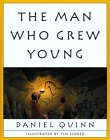
 The Man Who Grew Young by Daniel Quinn
My rating: 5 of 5 stars
What happens when the universe ends? Well, in The Man Who Grew Young by Daniel Quinn and Tim Eldred, the universe starts winding up like a giant yo-yo and everything that has ever lived and died lives again, but in reverse order. Basically, the history of the world begins at the end and moves towards what we know as the beginning. This is the basic concept of the graphic novel, but not nearly where it stops. Like in all Quinn books, the author dissects our culture and society like a surgeon with a scalpel, peeling back the layers of skin to reveal the veins and bones inside.
I was somewhat nervous when I first decided to read this graphic novel. For one thing, Quinn has written some of the best novels I’ve ever read, but sequential art is a different beast and not all prose writers are able to make the successful leap from writing to paint a picture to writing about a painted picture. Second, I wasn’t sure if he could come up with an interesting enough plot for a book that relies on visuals. Afterall, Quinn’s first novel Ishmael was on the surface a series of conversions between a man and an ape. Third, I had never heard of Tim Eldred, the man who did the art for the book. All of these worries plagued me as I sat down to read The Man Who Grew Young.
But Quinn quickly put my worries to rest with his opening scene, which introduced the protagonist, Adam Taylor, who, along with his son and a bunch of other people, are gathered in a cemetery. We normally associate cemeteries with death, sadness and mourning, but Quinn does an excellent job of reversing this experience. The use of superb dialogue helps reveal the jubilant mood of the scene.
“At the party somebody said we were “waking” my mom, is she awake already?” a young boy says to his grandmother. This is a beautiful use of language, because it puts such a unique twist on the concept of death: the dead can be woken.
With insightful, internal dialogue we are sucked into the story like lint into a vacuum. We soon learn that Adam Taylor is someone special as he travels back through the years without rejoining with his mother. We see him move back from the Manhattan project, through the discovery of America, back to the first native people of Africa.
Tim Eldred, who we learn in the introduction is from the PBS animated television show Dragon Tales, provides the art for the graphic novel. His art is functional and doesn’t hurt the story, which perhaps is highly suited to the subject matter in this graphic novel, because it makes the primary focus the story and allows it to shine through. I would have preferred more panels in some instances, because the panel to panel flow was really jumpy and he was asking the reader on some occasions to do too much work in between panels. Other than that, however, Eldred did a nice job and his full-page spreads were spectacular.
The Man who Grew Young is an imaginative, creative and poignant graphic novel that elevates sequential art to an all-time high and raises the bar for every other writer in the field. Quinn’s original concept is so simple it’s genius; it has you wondering, why didn’t I think of that? Most importantly, he doesn’t abandon the concept prematurely, but explores it thoroughly until the reader is exhilarated and left with the need to once again pass on Quinn’s inspirational message to others. Quinn is one of the most brilliant contemporary writers, and The Man Who Grew Young is a wondrous achievement that should win him great acclaim in the comic industry.
View all my reviews

No comments:
Post a Comment